

 Item added to basket
Customer Services
Care and Maintenance
Good footwear deserves good care. A few simple habits after each outing can prolong the life of your AKU boots and help maintain comfort, support and weather protection across UK mud, wet grass, grit, salt and repeated mileage.
After-use cleaning (every time)
Drying protocol (always)
|
Protection & conditioning (as needed)
Note on leathers: Natural leather can show differences in colour, tone and shading. These variations are a typical result of refined dyeing and material character. Storage (between trips)
|
Video tutorials
Step-by-step guidance for common maintenance tasks.
|
Cleaning mud & debris (every time)
The goal is simple: remove grit from seams, lace zones and outsole edges to reduce wear and keep materials working as intended.
GORE-TEX: quick checks for waterproof performance
Helpful for separating surface wet-out (DWR needs refreshing) from a genuine leak or seam issue.
Protective spray (leather & fabrics)
Use on clean, dry footwear to support water repellency and slow down surface wet-out in persistent UK damp.
Nourishing cream (natural leathers)
Occasional conditioning helps keep leather supple and reduces the risk of drying/cracking after repeated wet–dry cycles.
|
Replacing the footbed
A fresh footbed can improve comfort and odour control, and helps drying between wears.
Fast lacing: replacing the lace lock
If hardware is damaged, avoid forcing it — correct replacement preserves secure hold without over-tightening.
Tactical: replacing the lace lock
Straightforward guidance for replacing the locking component used on selected Tactical models.
Adjusting lace hook position
Fine-tune lace routing and tension distribution — useful if you want a more secure heel hold or reduced pressure points.
|
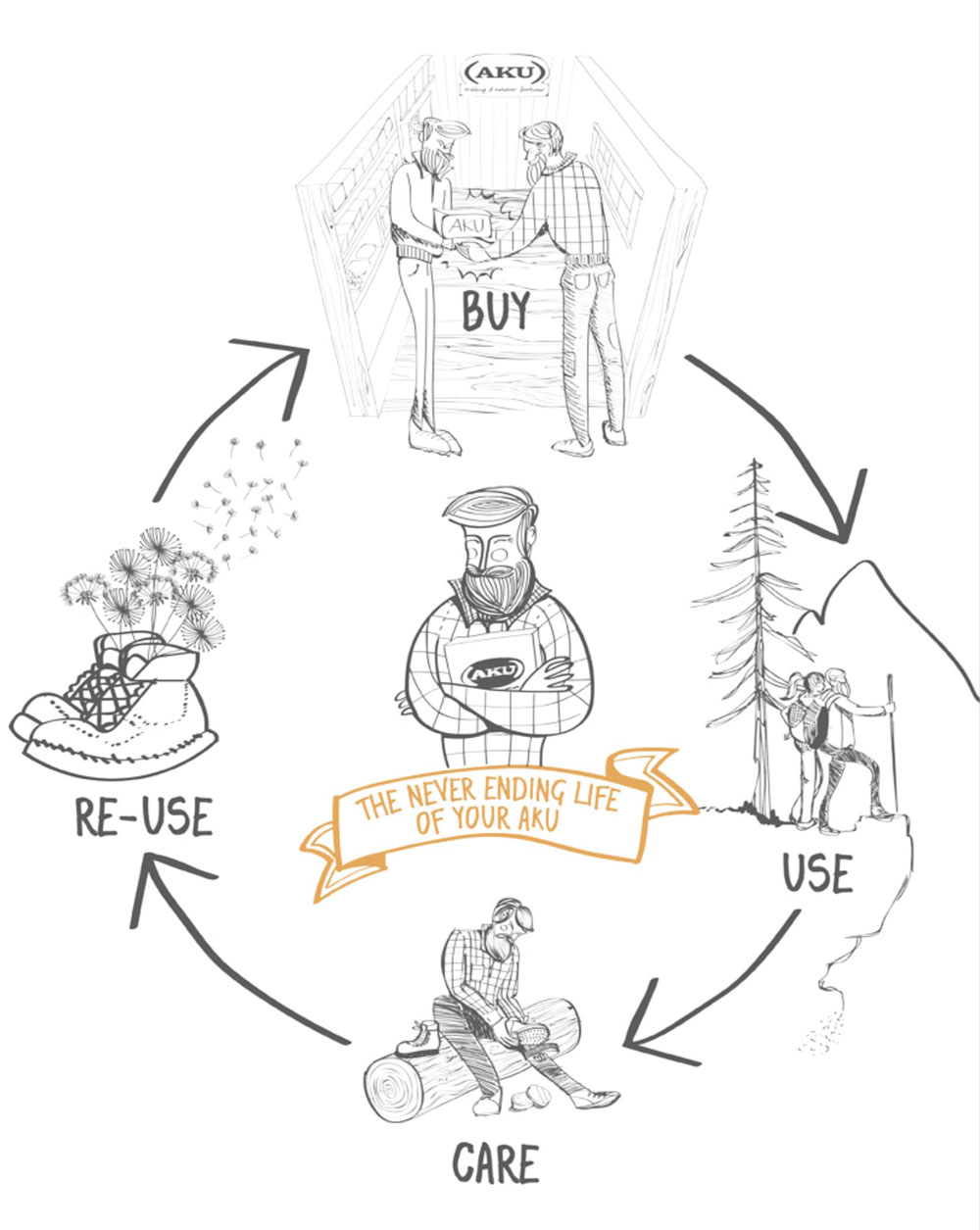
REPAIRIf there are problems with small parts, stitching, uppers or rubber edges, it does not automatically mean end of life. For UK repairs, we recommend Lancashire Sports Repairs Ltd. |
RESOLINGIf the upper is still functional but tread wear is reducing stability and grip, resoling may be appropriate (model-dependent). Check your product specification and use a professional service route for assessment. |
GOOD PRACTICEBefore retiring boots, consider a second role (gardening, workshop, woodland jobs). When footwear is truly end-of-life, dispose responsibly in line with local guidance. |
Quick checklist
|
|